The Story of Devon Loch: The Horse That Jumped a Shadow
The Grand National at Aintree is famous for producing dramatic triumphs and heartbreaking misfortunes. Yet few moments in its history are as widely discussed—or as puzzling—as the collapse of Devon Loch in 1956. It remains one of racing’s most extraordinary finishes.
The Perfect Race at Aintree
The 1956 Grand National carried significant attention due to the involvement of the British Royal Family. Devon Loch, owned by Queen Elizabeth The Queen Mother, was considered a strong contender on the day.
Ridden by jockey Dick Francis, who would later become a well-known author, the horse produced a polished and controlled round of jumping over Aintree’s demanding fences.
Turning into the home straight after the final fence, Devon Loch quickened clear of his rivals and appeared set for a famous victory as the crowd reacted to what looked like a decisive winning move.
The 40-Yard Collapse
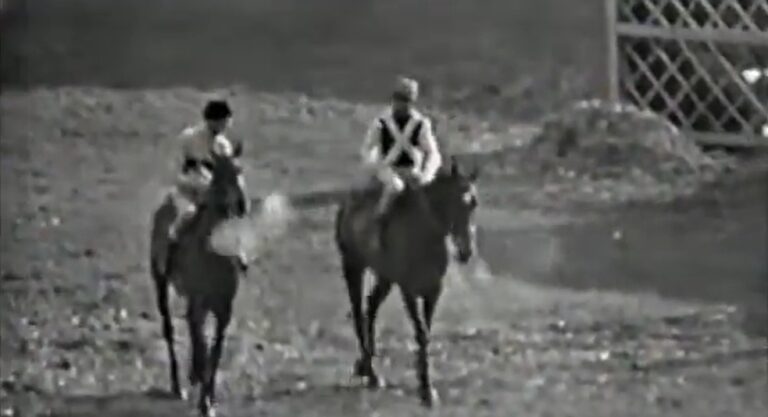
With victory appearing secure and only a short distance remaining, Devon Loch suddenly changed stride, leapt into empty space, and collapsed on the turf just yards from the winning post.
Dick Francis was thrown up the horses neck in the incident and had no opportunity to recover momentum. This allowed E.S.B. to pass and take one of the most unusual victories in Grand National history.
Devon Loch quickly regained his footing and returned uninjured. The Queen Mother is said to have offered calm reassurance to her jockey in the aftermath of the finish.
Theories Behind the Incident
Despite extensive analysis over the years, there is still no definitive explanation for what happened. Several theories continue to be discussed.
The Phantom Shadow
The horse may have reacted to a shadow cast by nearby obstacles, mistaking it for a fence and attempting to jump.
This remains one of the most widely referenced explanations.
The Crowd Effect
The intense noise and atmosphere from the crowd may have startled the horse at a crucial moment in the run-in.
Supporters of this theory point to the timing of the incident as significant.
Physical Breakdown
A sudden muscular issue or cramp has also been suggested as a possible cause.
This would explain the abrupt loss of stride in the final stages.
Jockey Dick Francis maintained that the horse reacted as if it had seen an obstacle, though no physical barrier was present.
Legacy of Devon Loch
Although Devon Loch did not complete the race as the winner, the incident secured a lasting place in sporting history. It remains one of the most frequently referenced finishes in British sport.
The phrase “doing a Devon Loch” has since entered wider usage to describe a dramatic failure at the point of expected success, extending far beyond horse racing itself.